The Key Points
-
Civil engineers shape how a site looks and works right from the start.
-
Civil engineering work reduces the risk of problems by spotting potential issues early on.
-
Civil engineers help make sure everything is compliant by doing approvals and technical submissions.
-
Civil engineers influence how feasible a project is, what the detailed design should be, how it gets built and how it's finally handed over.
-
Civil engineers manage programme risk by making sure things get done in the right order and on time.
-
Civil engineers help deliver cost certainty by thinking things through and making wise design decisions.
-
A civil engineer works alongside the structural and architectural teams to help make a project happen, rather than replacing them.
Who is a Civil Engineer
A civil engineer deals with the external and ground-related bits of a project like drainage, roads, levels and where utilities fit in. They figure out how a site will work and perform, both while it's being built and when it's all up and running.
Civil engineers tend to work alongside other professionals in the built environment. Architects decide the spatial design and planning. Structural engineers come up with the load-bearing structures. Surveyors provide the measured data and existing constraints. Contractors do the building and manage the construction.
Some of the key things that civil engineers do
-
Look at the site constraints and ground levels to work out if a project is viable.
-
Come up with some concept layouts for access, levels and drainage routes.
-
Do drainage design including SuDS and attenuation strategies.
-
Design the highways access, junction geometry and road alignments.
-
Develop earthworks strategies, including cut and fill balance.
-
Coordinate utilities and service corridors with the other disciplines.
-
Get the drawings, specifications and technical approvals submissions sorted.
-
Help with procurement by doing the tender information and clarifications.
-
Provide construction engineering support by doing inspections and answering design queries.
-
Help with handover by getting the as-built information and performance checks sorted.
Early Project Stages (Feasibility and Concept Design)
A civil engineer usually has a big say in whether a site is viable before the detailed design even starts. Feasibility studies look at the physical constraints, access potential and drainage feasibility. They also spot programme risks and cost uncertainty linked to ground levels, flood risk and utilities.
Concept design is where some of the practical decisions get made. The engineer will think about how vehicles get in and move around the site. They'll think about how surface water gets managed. They'll check if level changes need retaining structures or loads earthworks.
How early civil engineering input helps reduce risk
-
Identifying potential problems before the design gets fixed.
-
Getting a better handle on cost certainty through being realistic about earthworks.
-
Confirming drainage principles before the planning submission.
-
Reducing the need for late redesign because of highway or LLFA feedback.
-
Improving buildability by getting the access and levels planning right.
Detailed Design and Technical Approvals
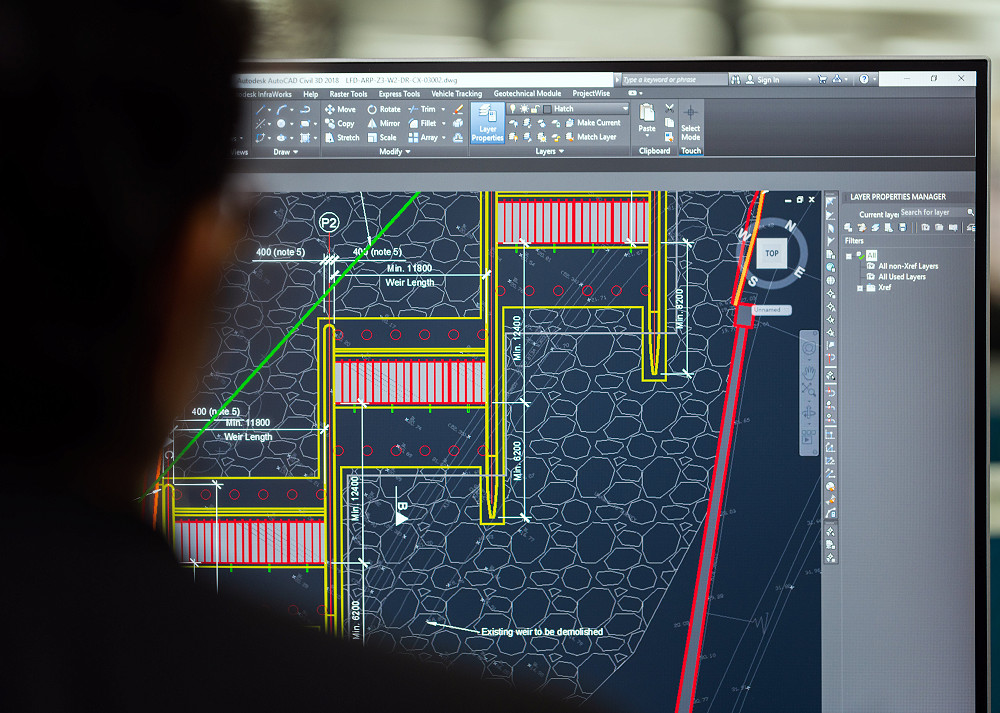
Detailed design is where the concept ideas get turned into something you can actually build. At this stage, civil engineering services often include drainage, highways and earthworks design plus utilities coordination.
Highways engineering gets a lot more detailed at detailed design. Junction design, road geometry, visibility splays and swept path analysis are all part of the package. Drainage design gets technical too, with pipe sizing, head calculations and storage volumes for attenuation.
What civil engineers usually do at the detailed design stage
-
Do drainage drawings and calculations for discharge and storage.
-
Lay out SuDS and show how to maintain them.
-
Design access roads and junctions.
-
Come up with a levels strategy and earthworks proposal.
-
Coordinate utilities and service corridors.
-
Do specifications and construction notes to help with tendering.
Planning and Regulatory Interface
Civil engineers help with planning permission by providing clear technical evidence. Planning decisions often depend on drainage strategy, highway access and site levels.
Some of the approvals that civil engineers help with
-
Highway access approvals and technical review.
-
LLFA drainage and SuDS review.
-
Discharge consents and local drainage constraints review.
-
Planning conditions related to levels and drainage.
-
Approvals in principle for specific site engineering elements.
Construction Phase Support
A civil engineer will often support construction through inspections, answering design queries and change management. Construction engineering activity includes checking that works follow the design and that site conditions match assumptions.
Things don't always go to plan during construction. Unexpected ground conditions can affect earthworks and drainage. Utility conflicts can require routing changes. Programme changes can require resequencing.
Some of the risks that civil engineers manage during construction
-
Incorrect levels and gradients that affect drainage performance.
-
Utility clashes that cause delay and rework.
-
Drainage installation defects that fail testing.
-
Access and surfacing issues that affect safety.
-
Uncontrolled changes that compromise compliance.
Handover and Asset Performance
Handover requires having all the right information about what was built. Civil engineers help get the as-built information and compliance confirmation sorted.
What information is required at handover
-
As-built drawings for drainage and highways.
-
Updated levels information and key setting-out references.
-
Maintenance requirements for SuDS and drainage features.
-
Records of testing and inspections for installed works.
-
Confirmation of compliance with approvals and conditions.### Residential vs Commercial and Infrastructure Projects
Residential projects usually end up being more compact and have simpler systems, but you can still expect the going to be tough due to space constraints. Commercial projects bring a whole extra level of complexity with them - they're bigger and you've got to worry about operational demands as well. Infrastructure projects on the other hand typically involve long stretches of land and meeting up with existing networks at various points.
Conclusion
One of the key things that civil engineers do is add real value right from the get go - whether its working out if a project is feasible, designing it, getting all the necessary approvals, actually building it, and handing it over to the client. You see, by getting involved early on, the end result is you get better compliance, a clearer picture of the costs involved, and you can actually rely on the programme sticking to its timeline.